
Central utility plant projects unlock campus-wide efficiency
How to create energy efficiency on a large scale
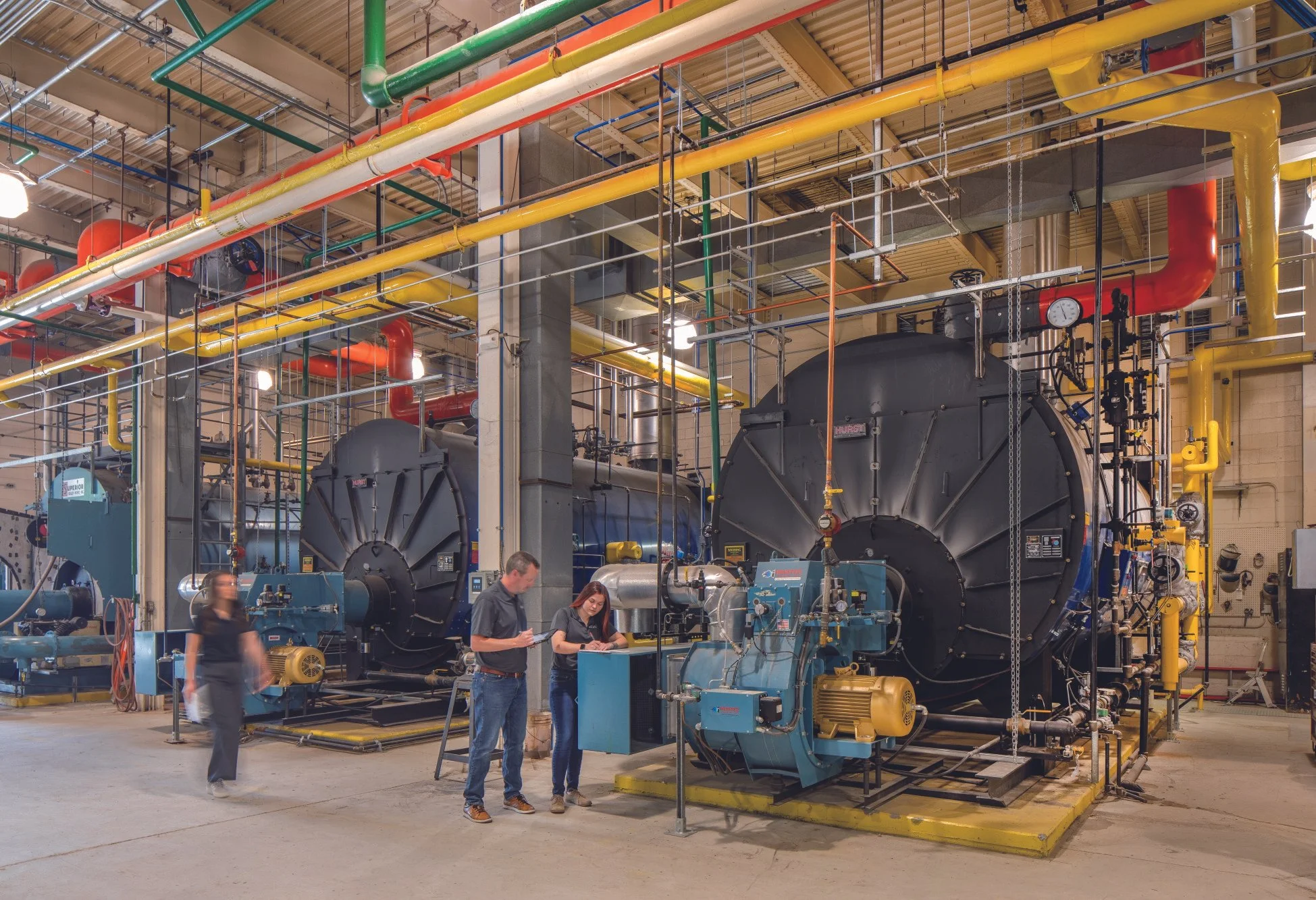
The central utility plant at the University of Nebraska-Omaha
Recent Perspectives


By Ryan Richard, Doug Nelsen and Richard Anderson
On a large campus, from universities to health systems, the central utility plant is often the engine that drives the efficient working of systems campuswide. These systems underpin every critical function on campus, supplying heating, cooling, power, and redundancy that support everything from patient care to research to student life.
Central utility plant projects — whether it’s a capacity upgrade, total retrofit or new build — represent a powerful, concentrated opportunity to improve energy performance, operational resilience and long-term flexibility across an entire campus.
When approached strategically, a single intervention at the plant level can deliver benefits that would be difficult, or even impossible, to achieve through distributed, building-by-building improvements.
As utility costs continue to rise—in some regions have increased by as much as 30% —campuses face growing pressure to balance fiscal responsibility with operational reliability. CUP design strategies that allow for flexibility in operation can minimize these types of swings and improve long term fiscal and operational resiliency.
A relatively simple enhancement such as a flue gas economizer illustrates this multiplier effect. Installed on a boiler system, it captures waste heat from exhaust gases, which often leave the stack at temperatures around 500°F, and repurposes them to preheat boiler feedwater or domestic hot water systems. This single addition can improve boiler plant efficiency by 6-10 percent. Critically, those savings apply to every building drawing from the system.
In hospital and university environments, where there is often continuous demand for domestic hot water, this recovered energy can be fully utilized, unlocking strong returns with relatively short payback periods, often in the range of three to four years. These are gains that simply cannot be replicated through distributed systems.
Based on a campus’s long-term plans and goals, a central utility plant project can contribute to decarbonization efforts, streamline for future growth or increase energy redundancy and resiliency.
The keys to success: plan for future growth, then customize the design to accommodate that growth by incorporating efficient new technologies and controls systems to create a central utility plant that provides the energy efficiency that’s right for the campus.
The Central Plant Advantage: One Intervention, Campus-Wide Impact
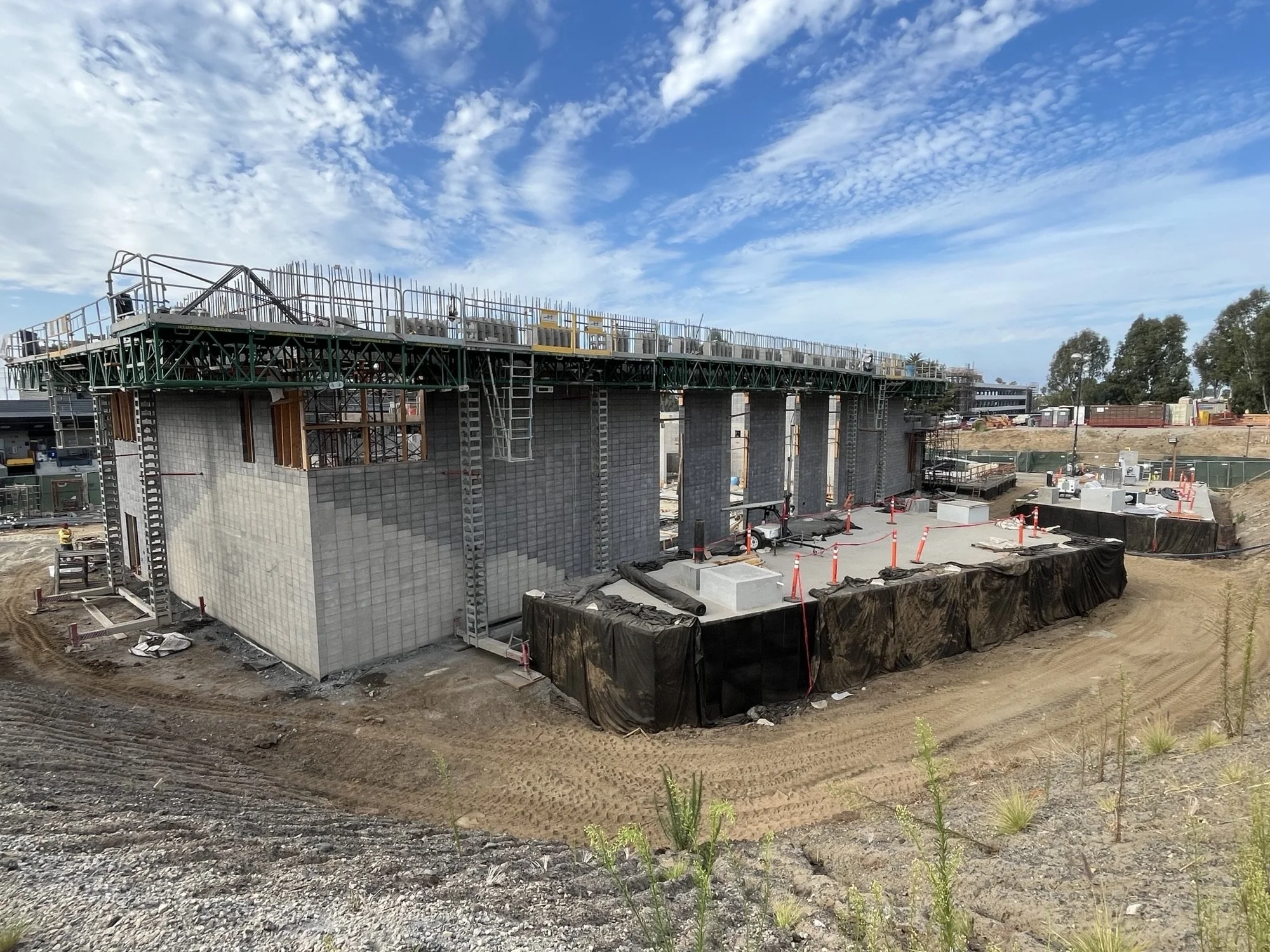
VA West Los Angeles
Energy consumption on campuses is heavily concentrated in heating and cooling production. That reality drives the fundamental advantage of central plant projects: improvements made at the source ripple across every connected facility.
Consider the contrast with typical building-level upgrades. Lighting retrofits, for example, are effective but inherently incremental: completed space by space, often disruptive to occupants, and dependent on long implementation timelines. By comparison, upgrading central plant equipment or processes immediately affects the entire load served by the system.
At the VA West Los Angeles Medical Campus, long-term growth planning served as a primary driver of the central utility plant strategy. The South Campus is being transformed into a comprehensive medical campus through multiple phases of development, requiring infrastructure capable of supporting both immediate needs and significant future expansion.
A new 53,000-SF central utility plant and 12,000-SF boiler plant are two facilities that will replace aging infrastructure while creating a scalable platform for future growth. The CUP has completed design and the boiler plant is currently under construction. To maintain uninterrupted operations, the new CUP and boiler plant will be phased into service while the existing boiler plant continues to support existing facilities, ultimately providing steam to both campuses through a new interconnected distribution network. The design includes redundancy for resilience of these mission-critical facilities and includes various underground vaults and tanks for fuel and water storage.
The new CUP is designed around a projected campus cooling load of approximately 4,200 tons and includes capacity for future expansion. The facility includes five chiller bays and a cooling tower yard sized to accommodate future equipment as additional buildings are constructed. Initial construction will install three high-efficiency water-cooled chillers and cooling towers, while reserving space and infrastructure for future capacity additions as the campus develops.
To support campus-wide reliability, the plant includes seven 2.5-megawatt emergency generators, with provisions for three additional units in future phases. Together, the system is designed to provide up to 96 hours of continuous operation, ensuring critical services remain functional during extended utility outages.
Location, location, location
In a ground-up project, the most important decisions might be the first ones: Where will the central utility plant be located?
Historically, many plants were located at the center of campuses, where loads were concentrated at the time of construction. As campuses evolve, these locations can become problematic — adjacent to new academic or clinical buildings, with visible flues, noise, and operational impacts.
But choosing a spot farther away can increase costs in infrastructure and in pumping energy.
It’s important to consider future planned growth. Every CUP project should align with the institution’s master plan. This includes understanding future building locations, anticipated load growth, and how plant placement and distribution strategies will evolve over time. In five years, in 20 years, how much capacity will the campus need? If the campus is expected to grow, what direction will it be? Are there other relevant changes being considered?
Physically, central utility plants need space for future growth. If the site is landlocked, an expansion can be expensive and disruptive. Designers should space-plan not only for the equipment being installed today, but also for the equipment that may be needed decades from now. That means reserving locations for additional chillers, boilers, cooling towers, or electrical infrastructure so capacity can be added without reworking the entire facility.
If a CUP is landlocked, a solution might be to plan for a secondary utility hub. Identifying and reserving these locations early allows institutions to "claim" strategic space and extend infrastructure into developing areas of campus, making future expansions faster, more efficient, and less disruptive.
Expanding for growth
Capacity expansion is frequently the driver behind CUP projects. New clinical towers, research buildings, or campus expansions place additional loads on existing infrastructure, forcing institutions to confront limitations in their current systems.
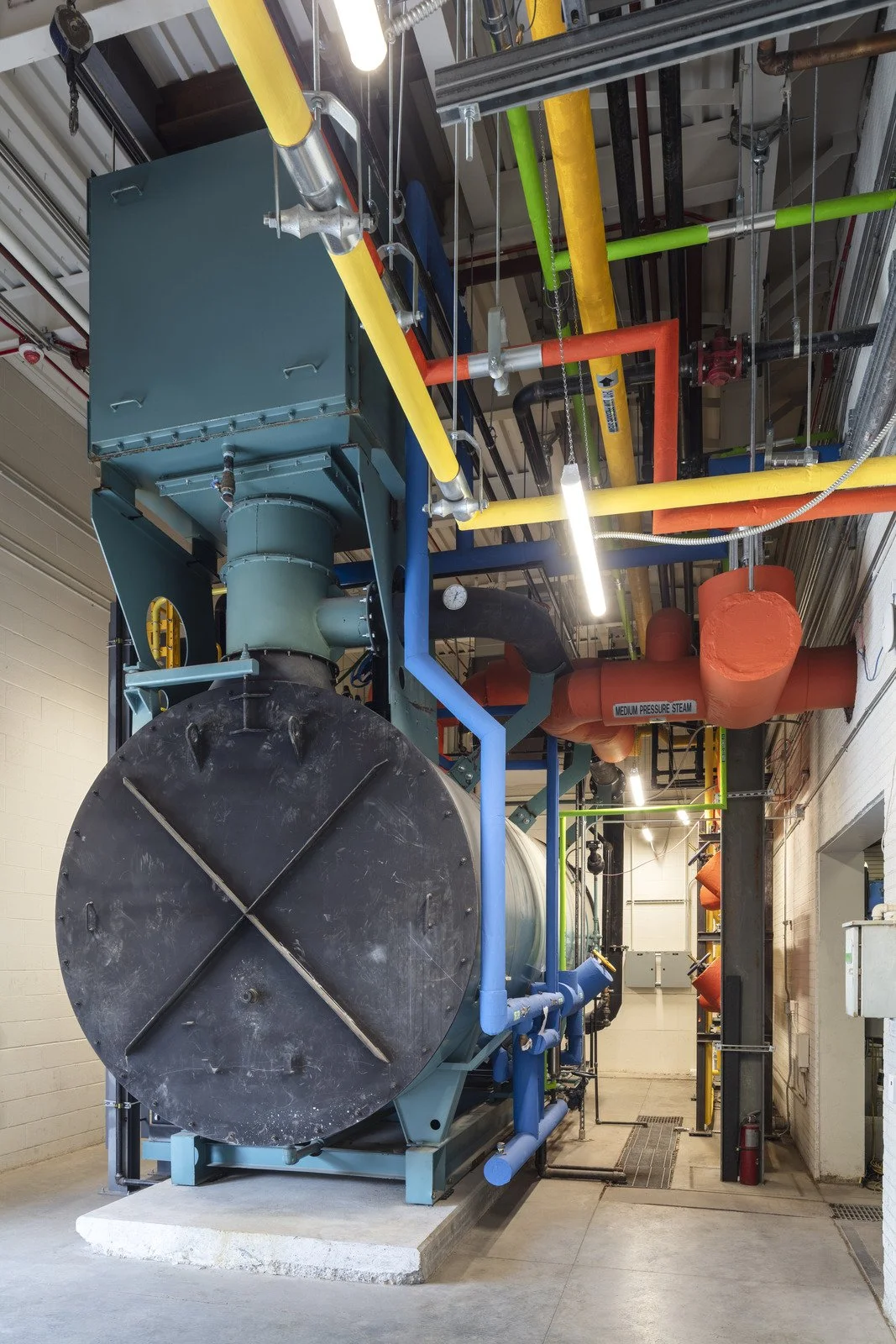
For the new Saint Francis bed tower in Muskogee, Oklahoma, the boiler feedwater was preheated with the flue economizer, creating efficiencies.
Just like in a new build, in an expansion of a central utility plant, it’s key to consider not only the current project but future projections. An owner shouldn’t upgrade a central utility plant at great expense, only to realize in a decade that it is again insufficient for the current need.
During the expansion of the hospital at St. Francis Muskogee, LEO A DALY performed an extensive analysis on current and future needs for the hospital and provided a study for building a new CUP or expanding the existing CUP. Although the site was tightly constrained, expanding the existing CUP was determined to be the most cost effective solution. The study determined the existing piping infrastructure was large enough to accommodate the additional steam and chilled water services required for the new addition.
Upgrades to the existing CUP included a new deaerator installed in the existing CUP footprint, and a new addition to house a 1,000 ton chiller and 600 BHP boiler. A new cooling tower was installed on the roof in a screened enclosure. New pre-insulated chilled water, steam, and condensate piping was installed from the CUP to the new hospital patient tower which was located on the opposite side of campus from the existing CUP.
Power upgrades at the CUP expansion included upgrading the existing 4,160V distribution system with a new 12,470V distribution system to allow greater flexibility when adapting for future campus expansion projects. A new generator supports not only the new tower but also allows for system redundancy in the event of a single generator failure.
Consider upsizing distribution systems to handle future expansions. When installing buried piping, the largest expense is tearing up the ground. Once already under construction, increasing pipe size increase the price by 10-15% and allows for 20% or more additional capacity.[RM1] (Depending on maintenance priorities and budget, other options such as trenches or walkable tunnels are potential options to increase future flexibility.)Decisions around electrical infrastructure, such as increasing voltage distribution levels, can position a campus for future growth. Higher-voltage systems enable more efficient power distribution and support expanded development without requiring major reinvestment in foundational infrastructure.
Advanced Technologies: Tailoring Solutions to Load Profiles
Not every efficiency strategy applies universally, but CUP projects provide the ideal platform to evaluate and deploy the technologies that best match a campus’s operational profile.
The key opportunity lies in reframing the question: not just how do we accommodate more load? but how do we serve that load more efficiently and intelligently?
Many new technologies offer that opportunity in today’s central utility plants, including:
Heat recovery chillers, which simultaneously produce chilled water and useful heat, improving overall system efficiency.
Thermal energy storage, such as chilled water tanks, which enable load shifting and peak demand reduction.
High-efficiency electric or hybrid boiler systems, depending on decarbonization goals.
Heat pump chillers, particularly effective in facilities with significant simultaneous heating and cooling demands or high domestic hot water usage.
Pre-cooling strategies, using cooling towers to reduce chiller loads under favorable conditions.
More complex systems, such as cogeneration (combined heat and power), offer additional benefits in specific contexts. By generating electricity on-site and capturing waste heat for steam or hot water production, these systems can achieve very high overall efficiencies. However, they are only appropriate for a small subset of campuses with the right scale, load consistency, and operational requirements.
At the University of Nebraska-Omaha, the replacement of major chiller and boiler equipment within the campus’s central utility plant for the 685-acre campus offered measurable energy savings.
The new chiller operates 30% more efficiently than the original. The new cooling tower design will greatly improve water usage through improved drift eliminator technology compared to the original wooden towers. The boiler flue stack economizers recover waste heat from the boiler flue exhaust and transfer that energy to the boiler incoming feedwater, improving the overall efficiency of the steam system.
Large refrigerant systems that are found in chiller equipment can have negative global warming impacts from the properties of the refrigerant used in the refrigeration process. The original UNO chiller refrigerant, R-134a, has a Global Warming Potential of up to 1,470, while the new refrigerant utilized in the replacement chiller, R-514A’s GWP is only 7. The use of the lower impact refrigerant will result in less emissions over the course of the new chillers life span improving the overall environmental impact of the CUP.
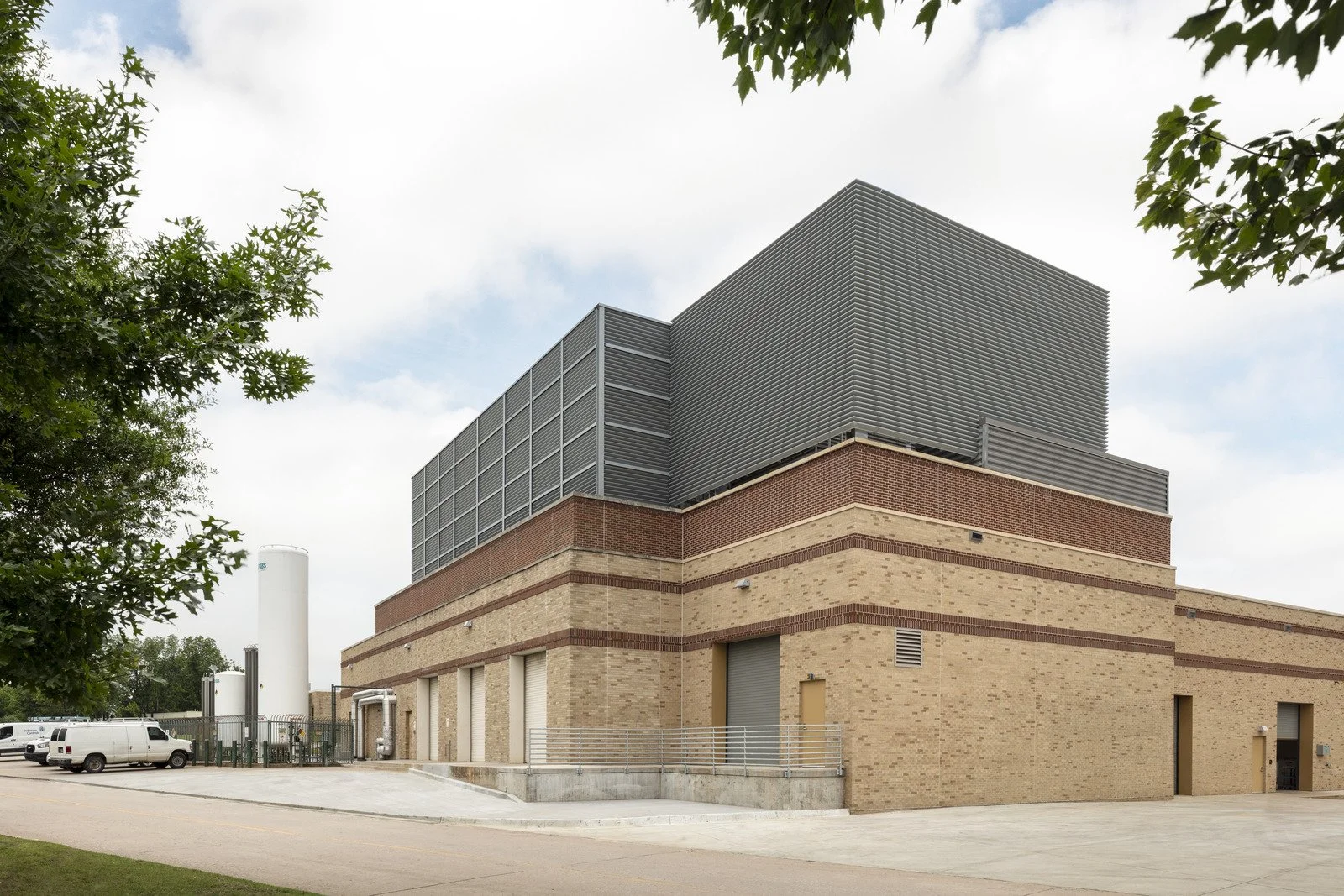
The St. Francis Muskogee central utility plant was upgraded as part of a new bed tower project.
Controls and Analytics: The Hidden Layer of Efficiency
While equipment upgrades are highly visible, some of the most impactful improvements come from modernizing controls and instrumentation.
Legacy plants often rely on manual or minimally automated controls, limiting their ability to operate efficiently under varying loads. In contrast, advanced control systems continuously monitor temperatures, flows, and system demand, dynamically optimizing the number and operation of chillers, pumps, and boilers.
This optimization ensures that equipment operates in its most efficient range, reducing both energy consumption and wear.
Beyond real-time performance, enhanced data collection enables predictive maintenance. By tracking trends over time, facilities teams can proactively identify issues and schedule maintenance based on actual performance data rather than assumptions. This improves reliability, extends equipment life and reduces lifecycle costs.
As AI is being incorporated into controls technology, there are more opportunities for streamlining, for example, optimizing equipment operation based on weather forecast. As the technology becomes more sophisticated, there are more places where AI can find efficiencies.
A Strategic Infrastructure Investment
Central utility plant projects represent a strategic investment with the potential to transform campus-wide performance.
By focusing on efficiency at the point where the majority of energy is generated, institutions can achieve meaningful reductions in operating costs and carbon emissions. By consolidating systems and enhancing redundancy, they can improve reliability for mission-critical operations. And by aligning plant design with long-term campus planning, they can create infrastructure that supports growth for decades.
For facility managers and campus leaders, the takeaway is clear: the next central utility plant project is an opportunity to fundamentally improve how the entire campus operates — more efficiently, more resiliently and more strategically than ever before.
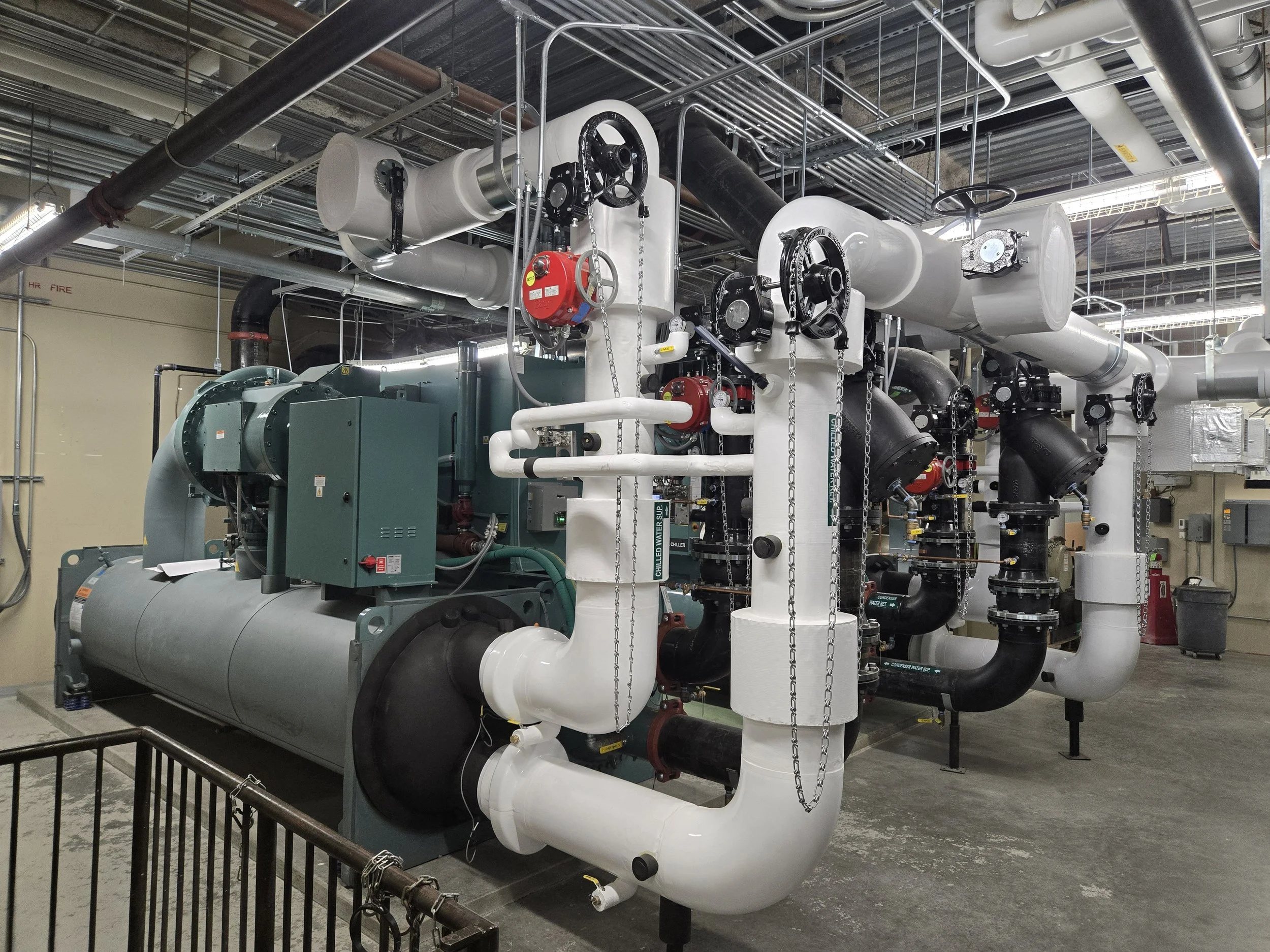
Phelps Memorial Health Center central utility plant
About the authors

Ryan Richard, PE, QCxP
Senior mechanical engineer
Ryan brings nearly 20 years of experience in facility design and the engineering of industrial and central heating and cooling plant systems, including associated district distribution piping. Ryan began his career as a nuclear submarine officer, bringing a disciplined, mission-focused approach to complex engineering challenges.

Doug Nelsen, PE
Practice lead, electrical engineering
With over 20 years of industry experience, he leads LEO A DALY’s award-winning electrical engineering work across markets and geographies.

Richard Anderson, PE, LEED AP,
Senior mechanical engineer
Richard brings deep technical expertise from over 34 years of experience in a variety of aspects of central utility plants including controls, steam systems and chiller-boiler optimization.