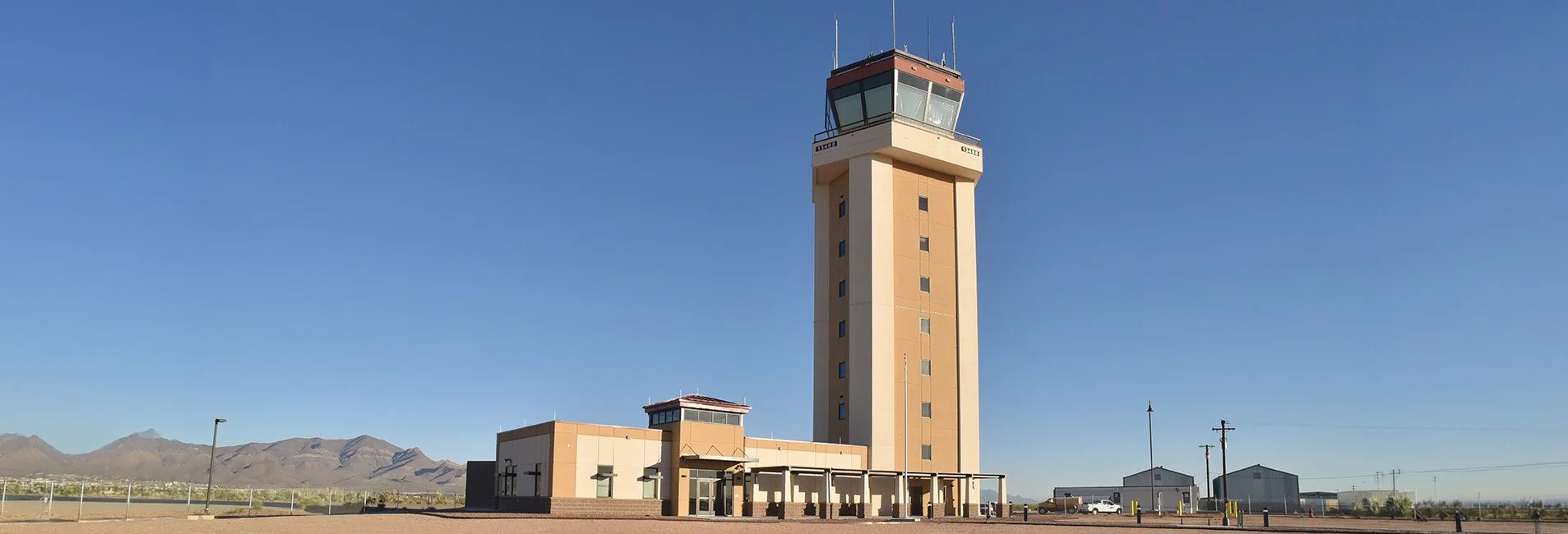
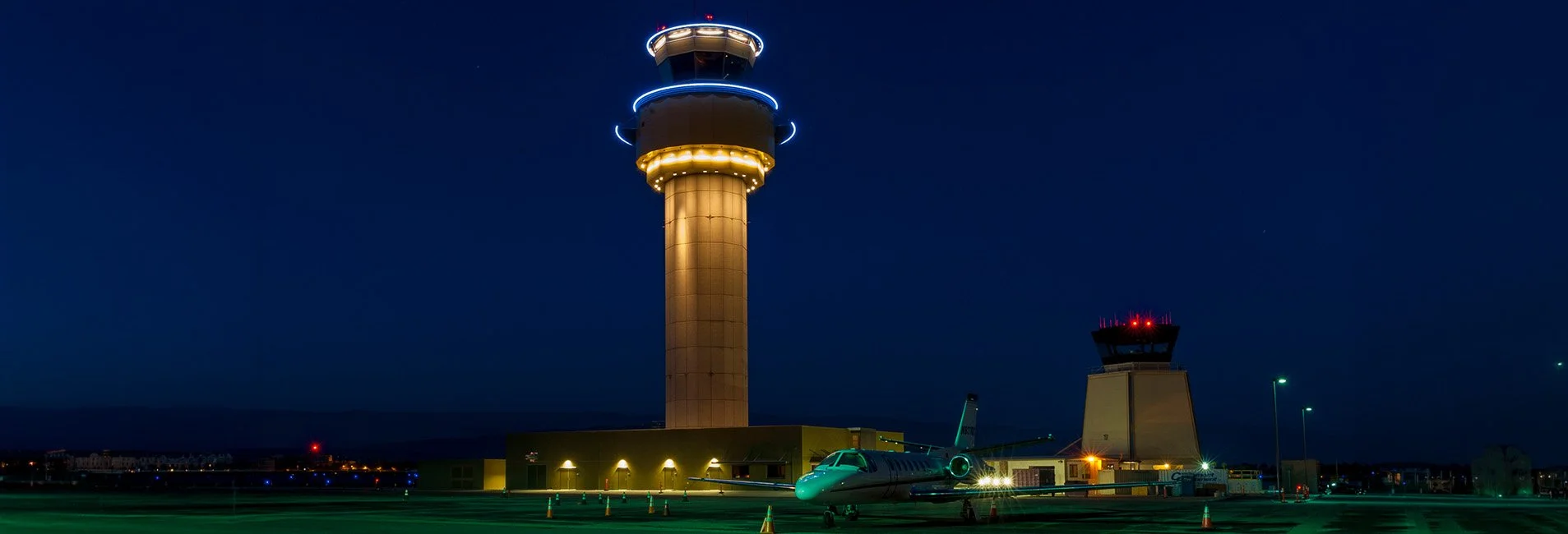
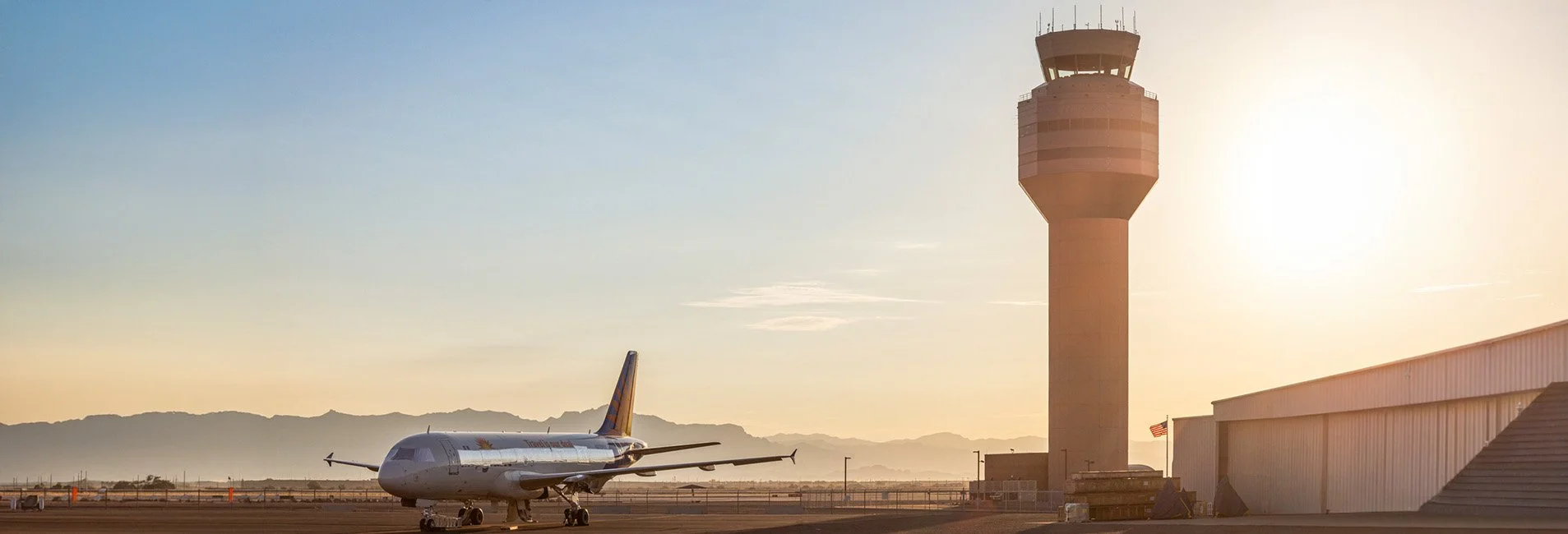
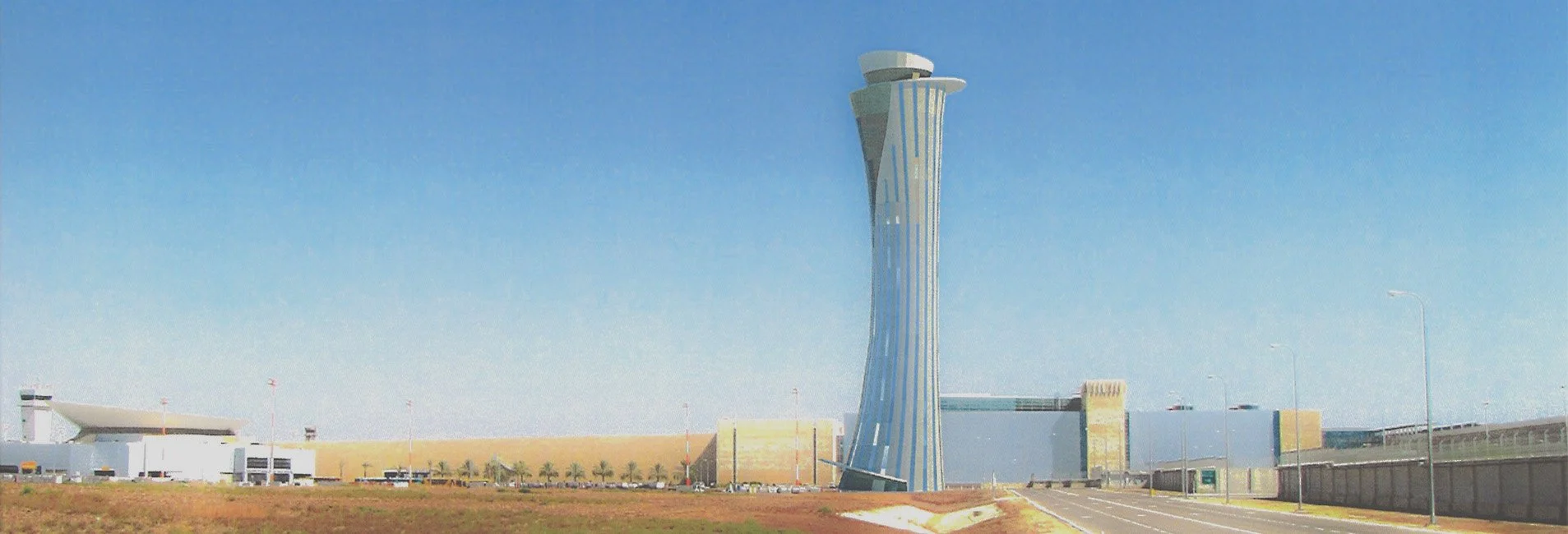
Toledo Express Airport, Air Traffic Control Tower and Base Building
Toledo Express Airport, ATCT + Base Building
-
Toledo, OH
-
FAA Great Lakes Region
-
133 Foot Tower
9,00 SF Base Building
-
Design adapted to FAA requirements and localized operational needs through modifications to a standard ATCT design
Extensive blast analysis and blast-hardening strategies due to proximity to airport terminal access road
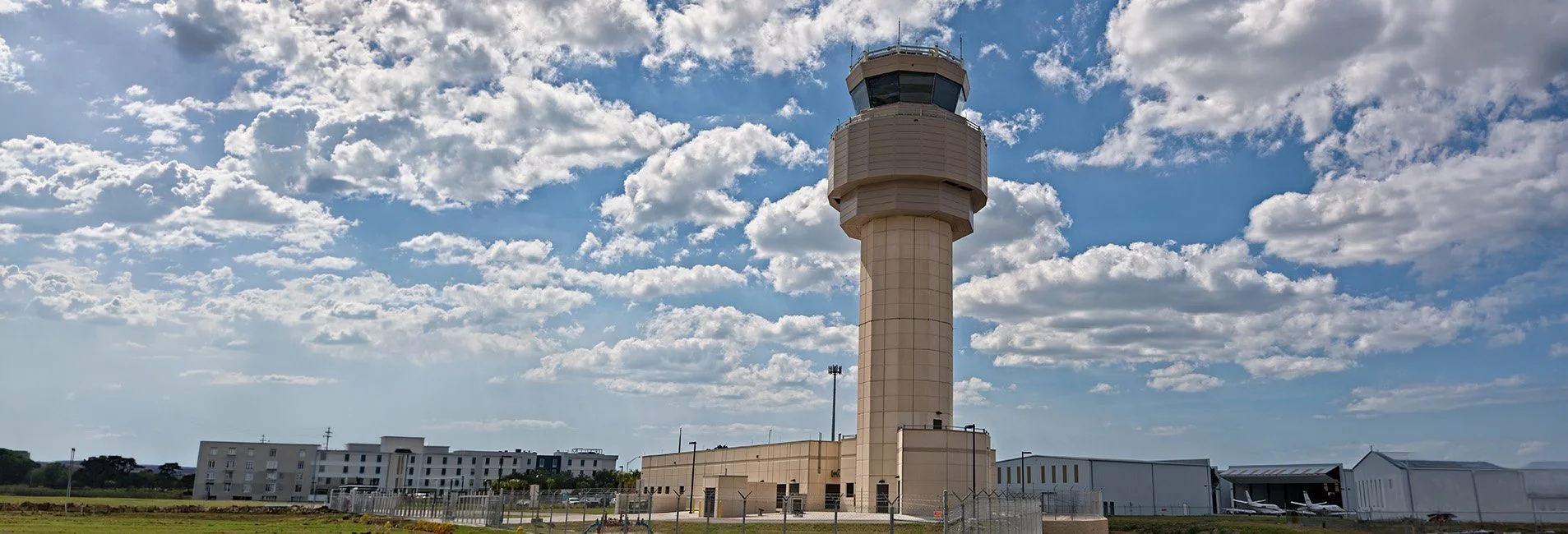
ATCT shaft constructed with insulated sandwich-panel precast concrete wall system
Interlocking precast panel edges designed to resist wind-driven rain and ensure watertight performance
Upper-level insulated metal panels backed by high-strength, explosive-resistant concrete for AT/FP compliance
External roof and walkway drainage system to eliminate internal roof drains and reduce risk of water intrusion in equipment rooms
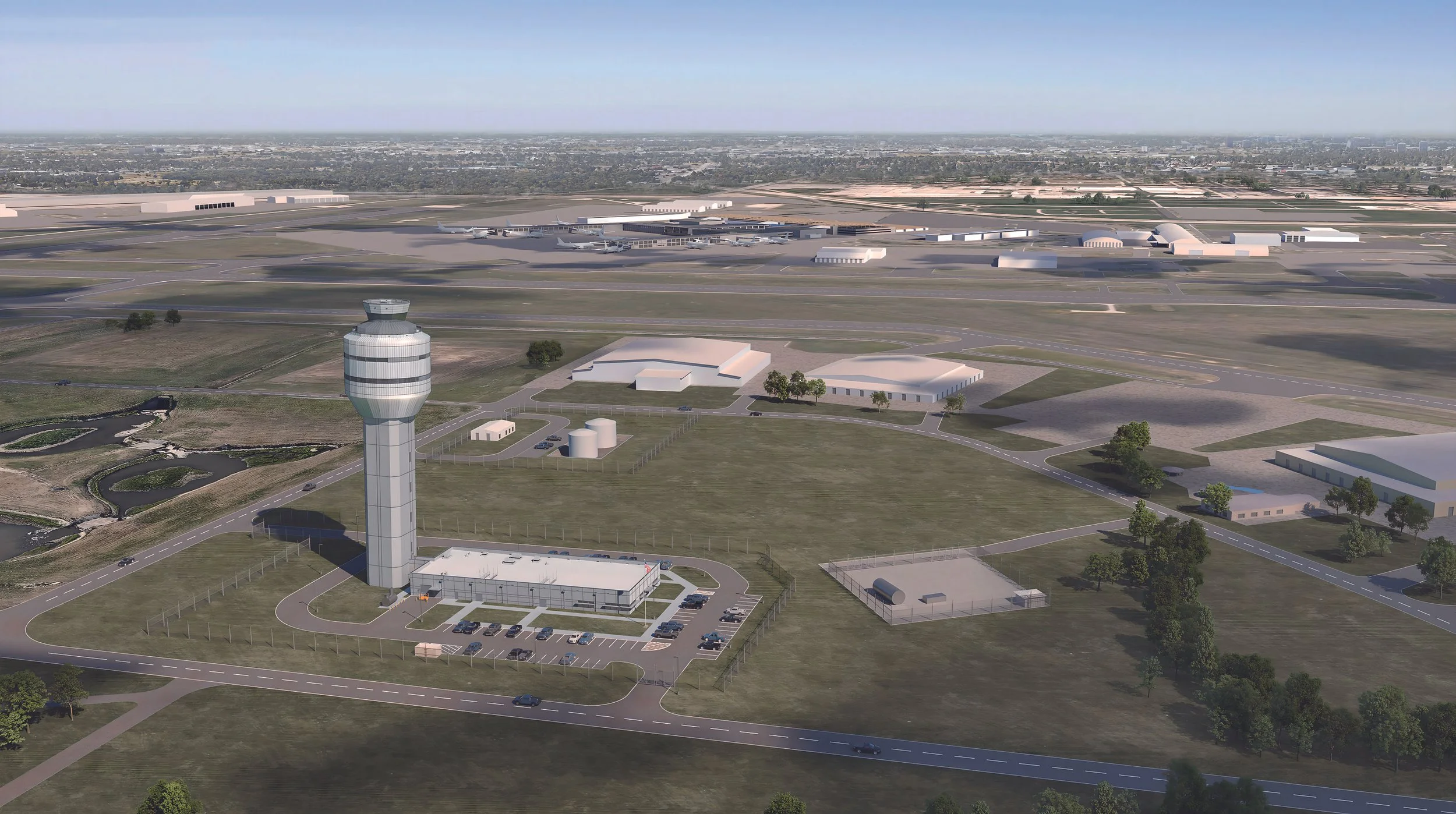
Compact site requiring intensive coordination to maintain secure Air Operations Area (AOA) access and uninterrupted airport operations
Integration of security and operational requirements with adjacent airport functions and circulation systems
-
Site Planning and Site Selection, Master Planning, Design, Construction Documents, Full Architectural and Engineering Services
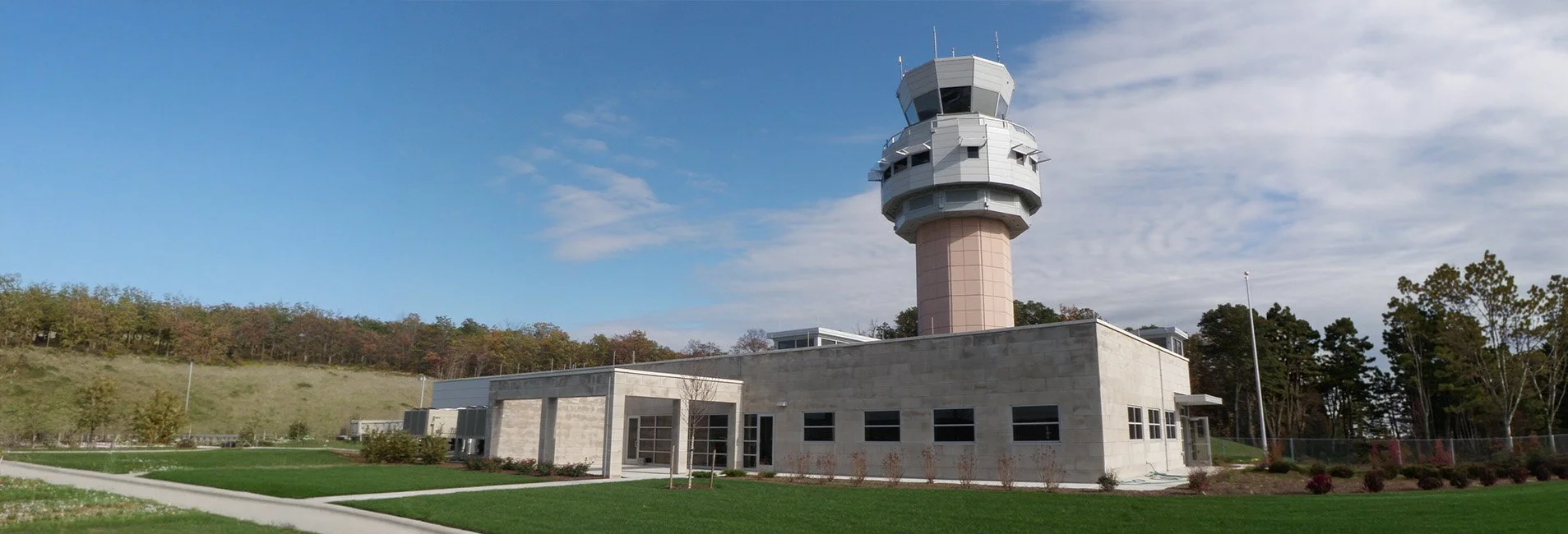
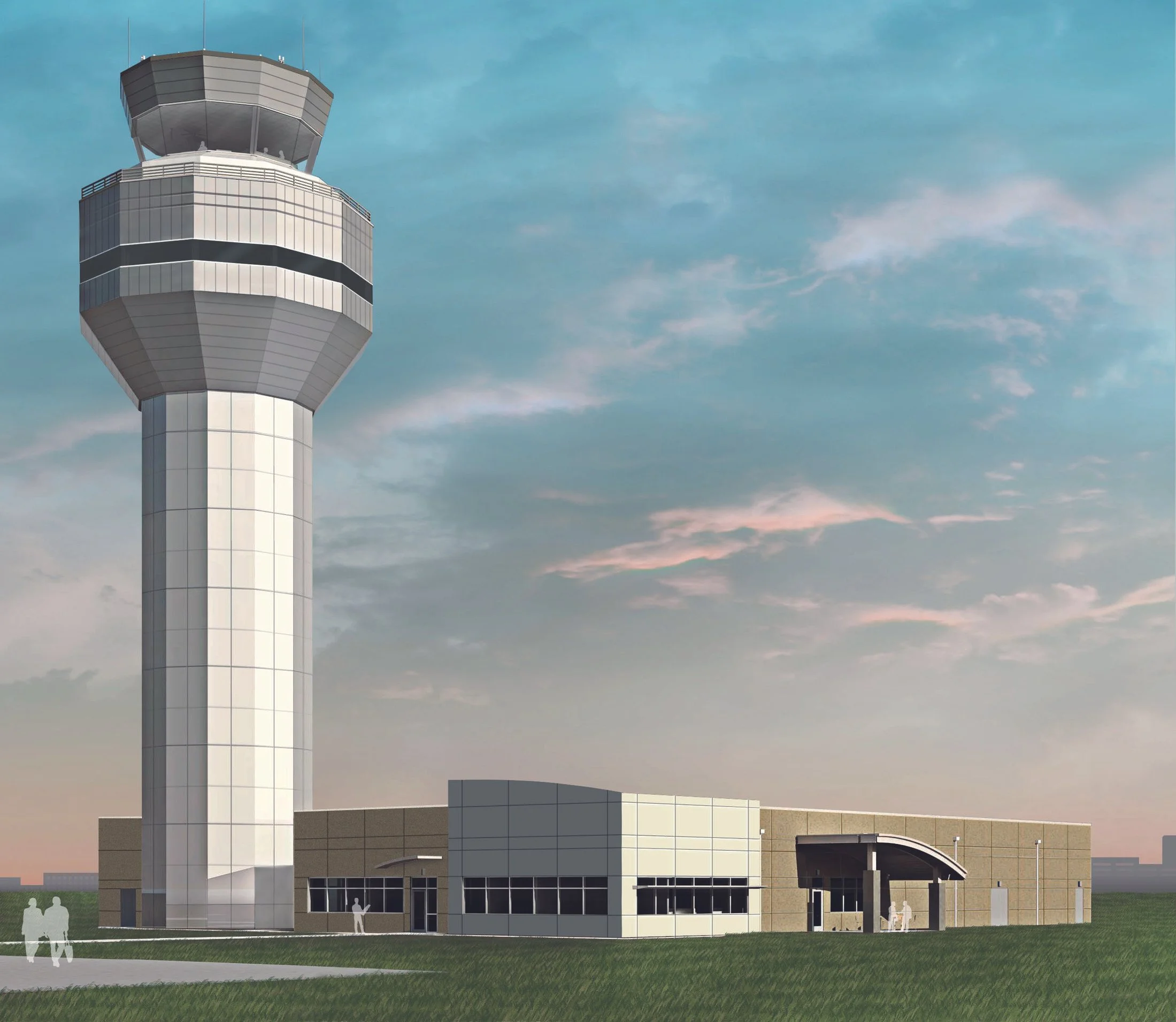
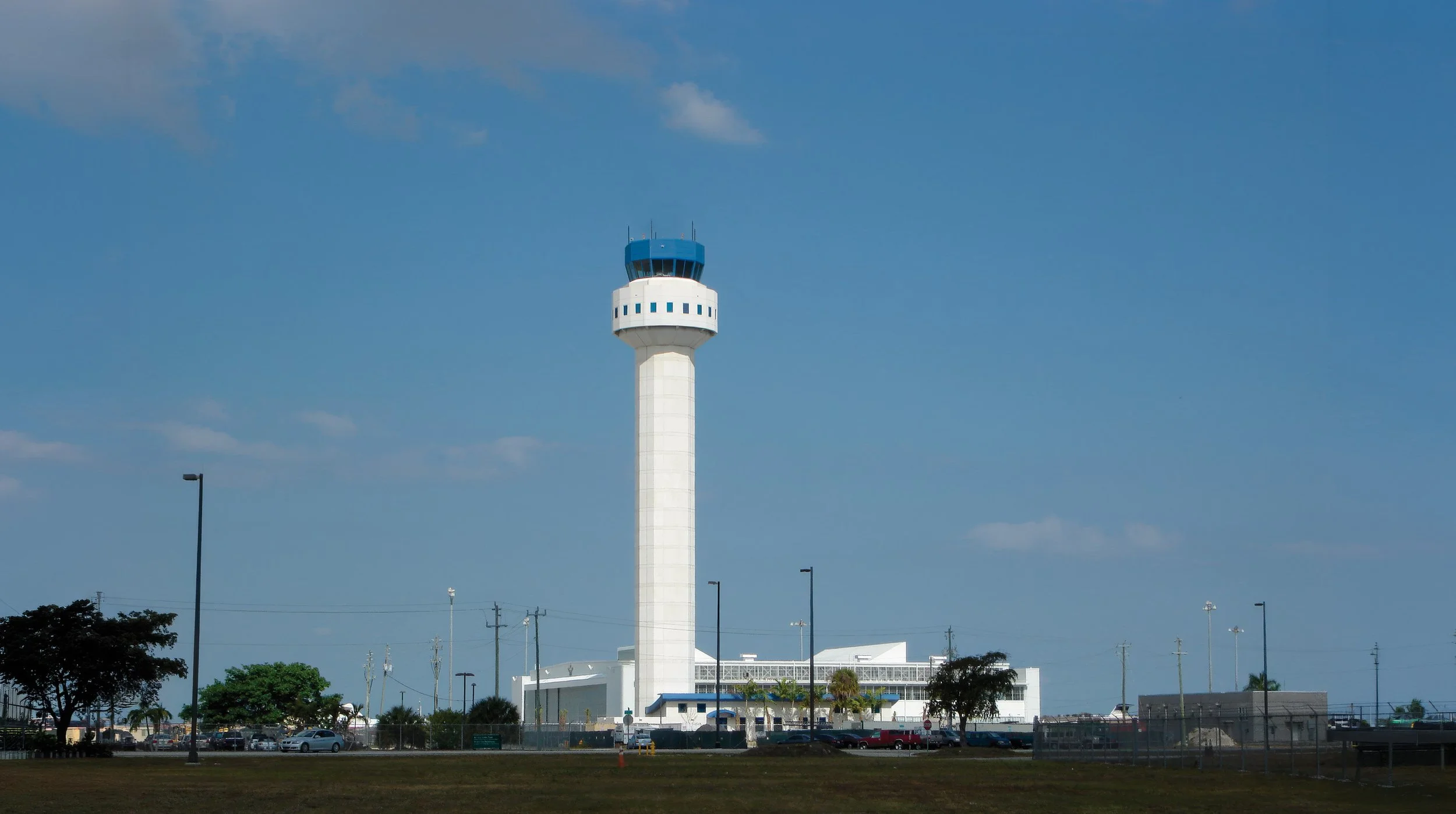
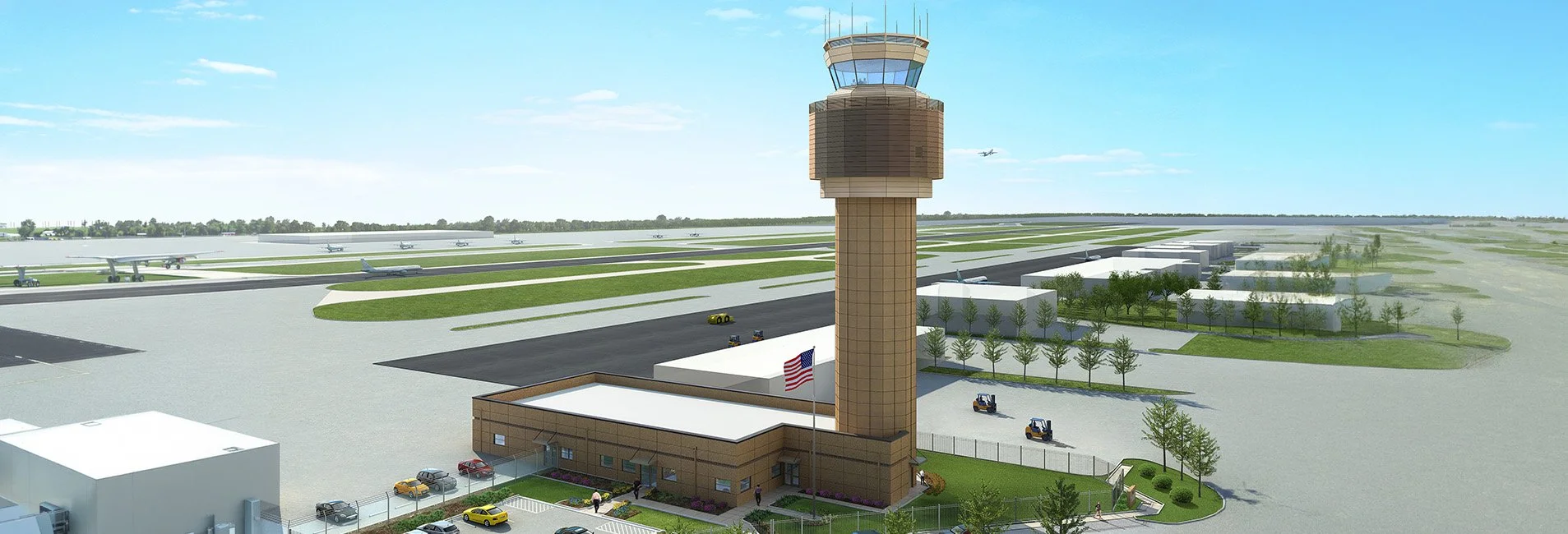
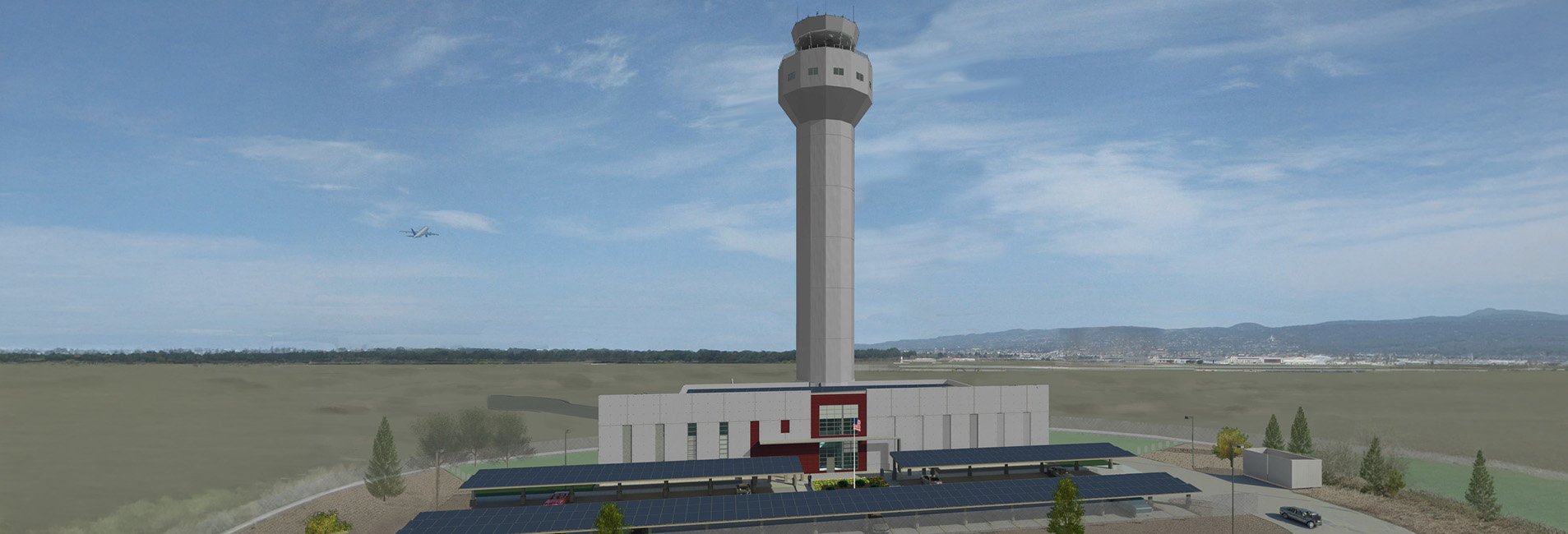
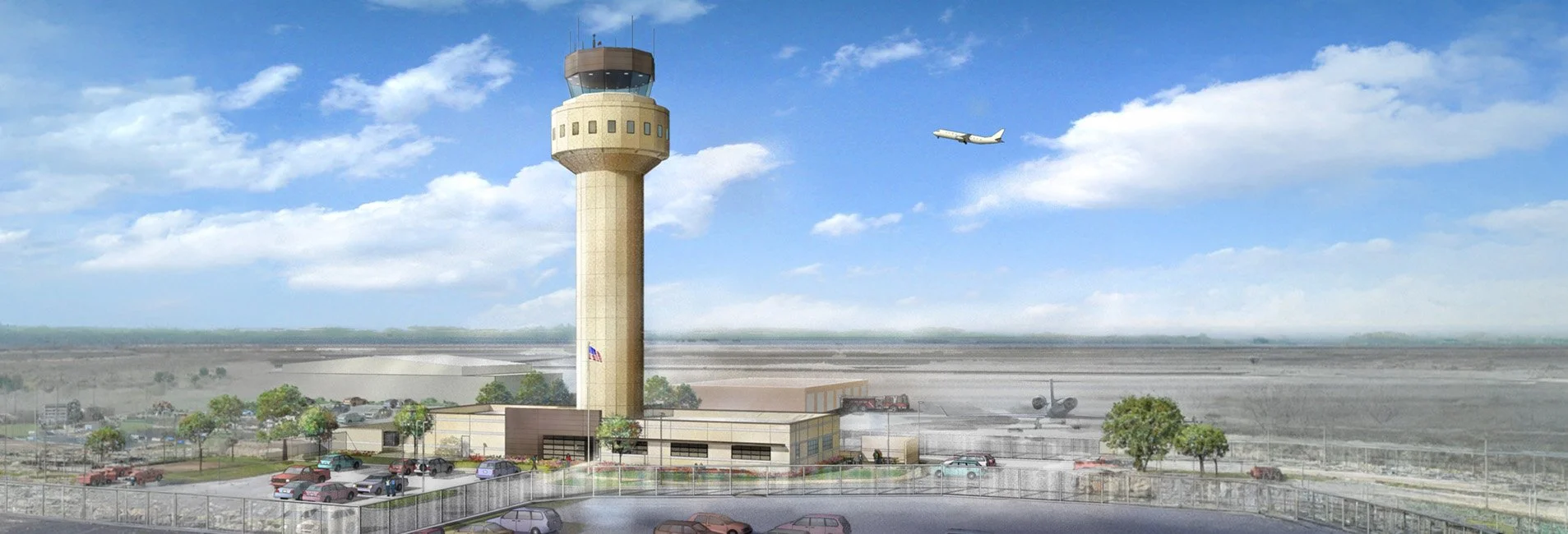
LEO A DALY participated in the site selection, safety risk management, design, and A/E services for a 133-foot air traffic control tower (ATCT), and a 9,600-SF base building at the Toledo Express Airport.
Due to the close proximity of the airport terminal access road, this tower and base building required extensive blast analysis and blast hardening. The standard design was modified to incorporate features desired by the local FAA to meet local needs. The ATCT shaft was designed out of insulated sandwich-panel precast concrete panels. The precast panels also were designed with interlocking edges to resist wind driven rain and help ensure water-tight construction. The upper level insulated metal panels were backed-up by high strength, explosive-resistant concrete panels to meet AT/FP requirements. The cab roof and walkway were designed to drain externally to eliminate bringing roof drains through the building, therefore eliminating the possibility of water leakage in the equipment rooms.
The small site required close coordination and security integration to allow access to the AOA while maintaining routine operation of services for the ATCT, as well as the operation of adjacent functions.