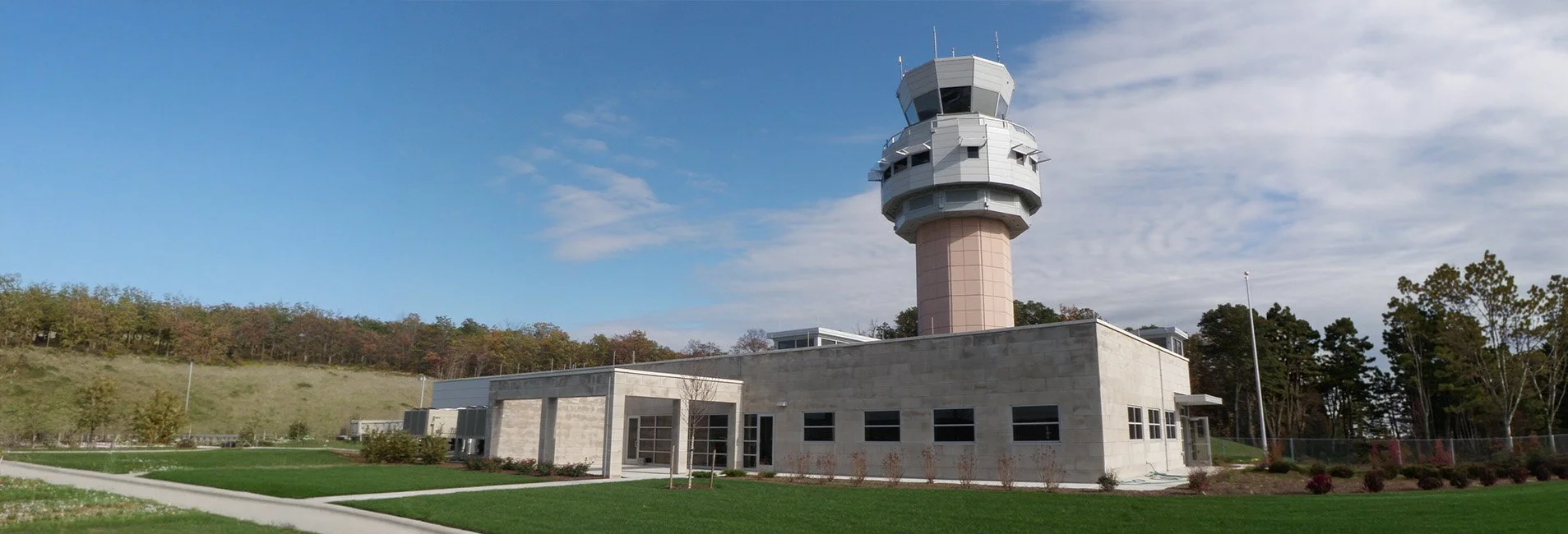
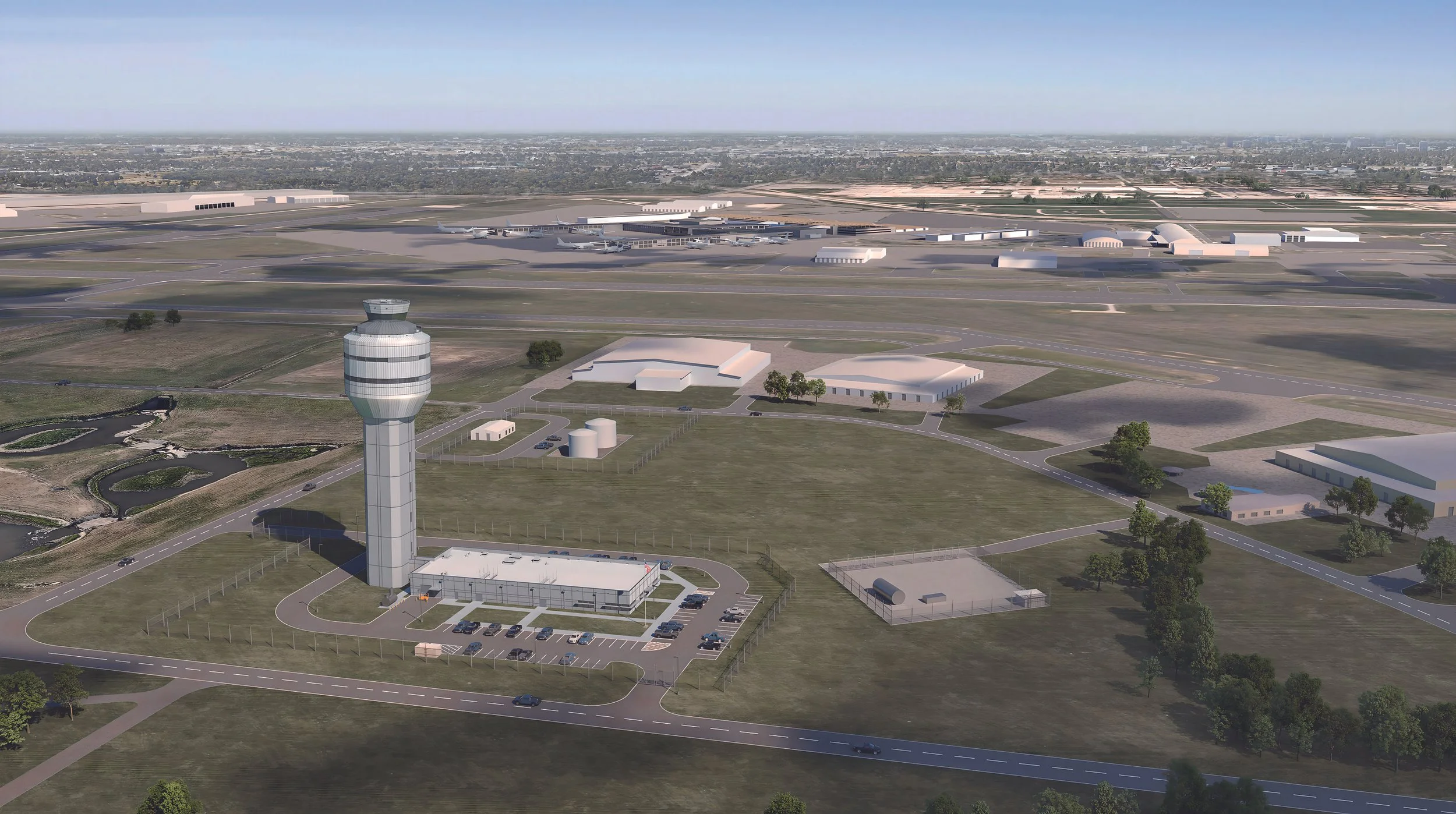
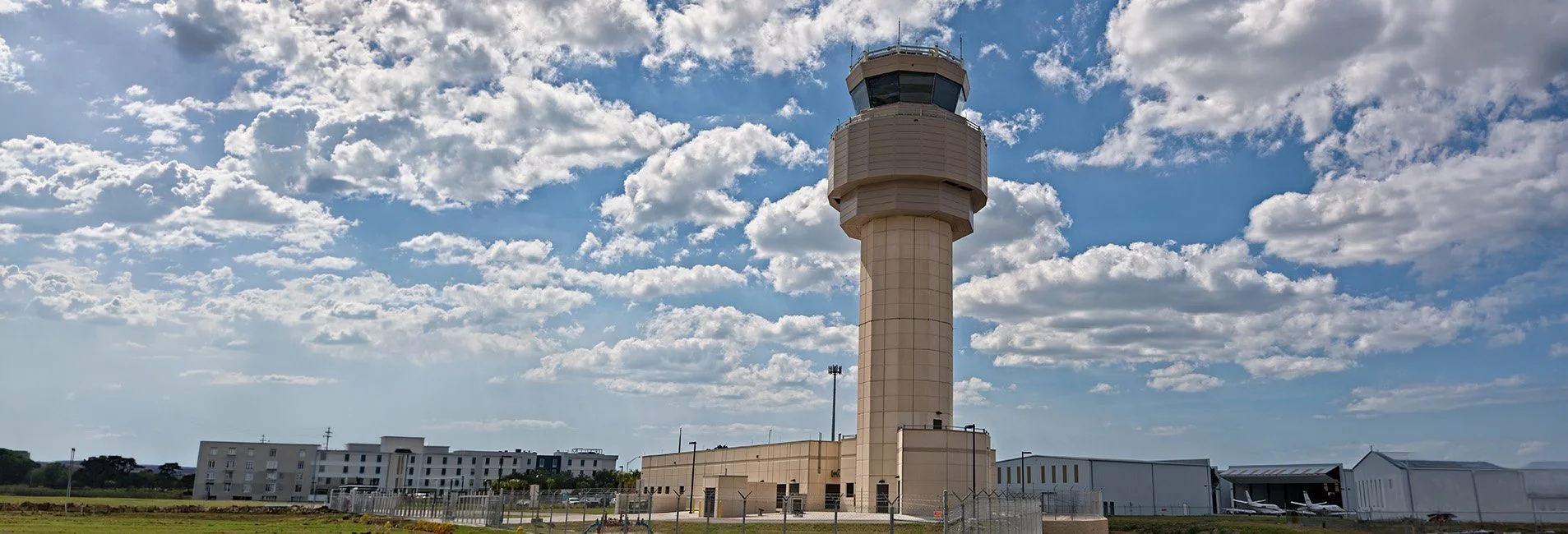
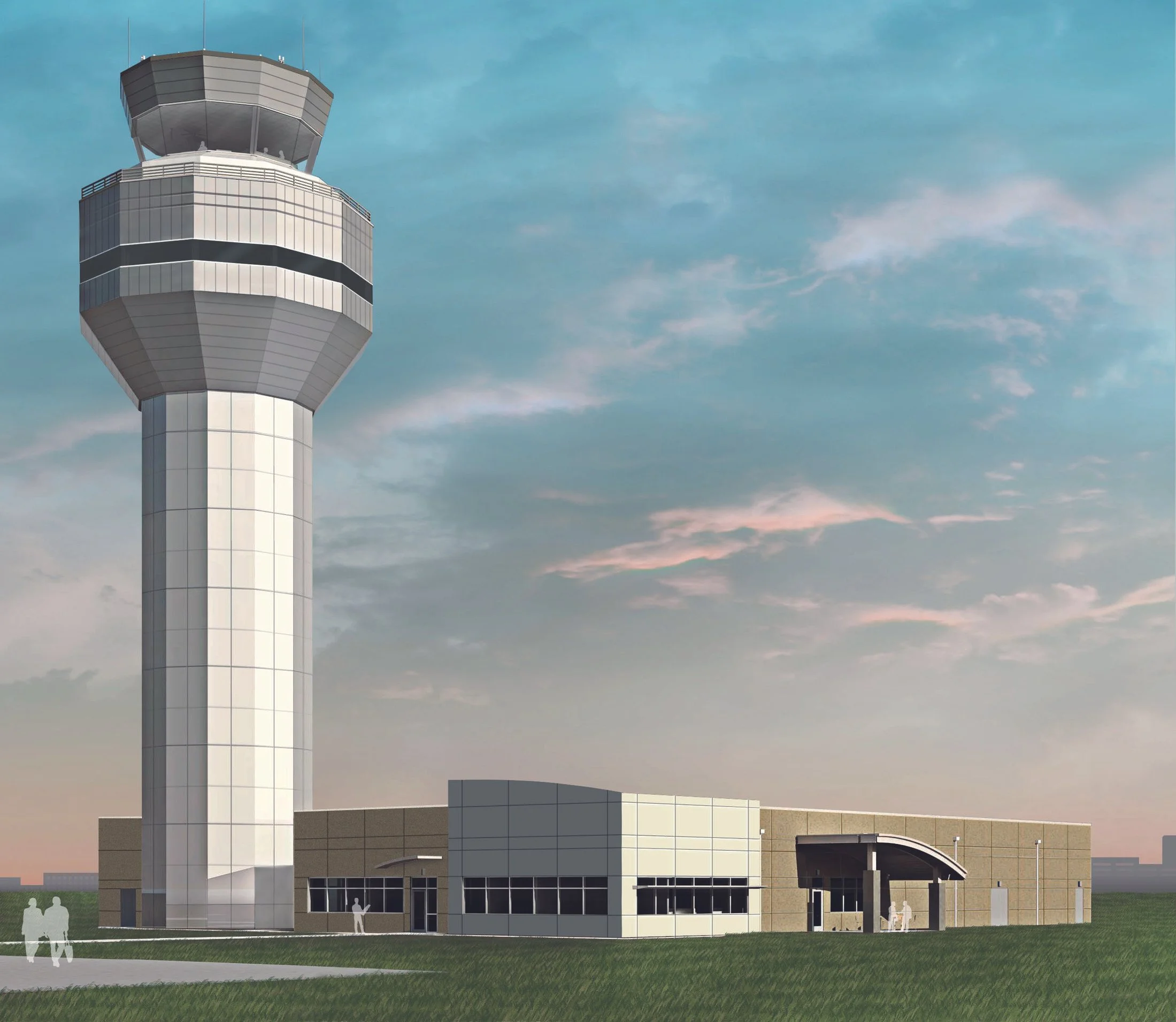
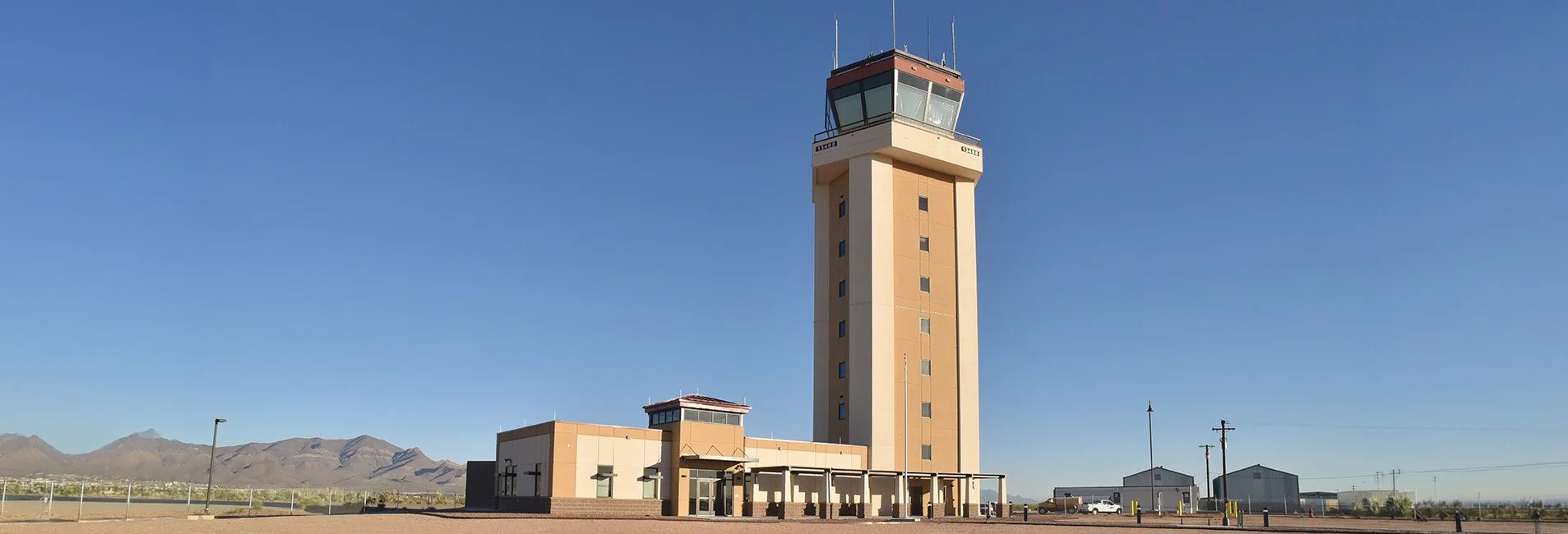
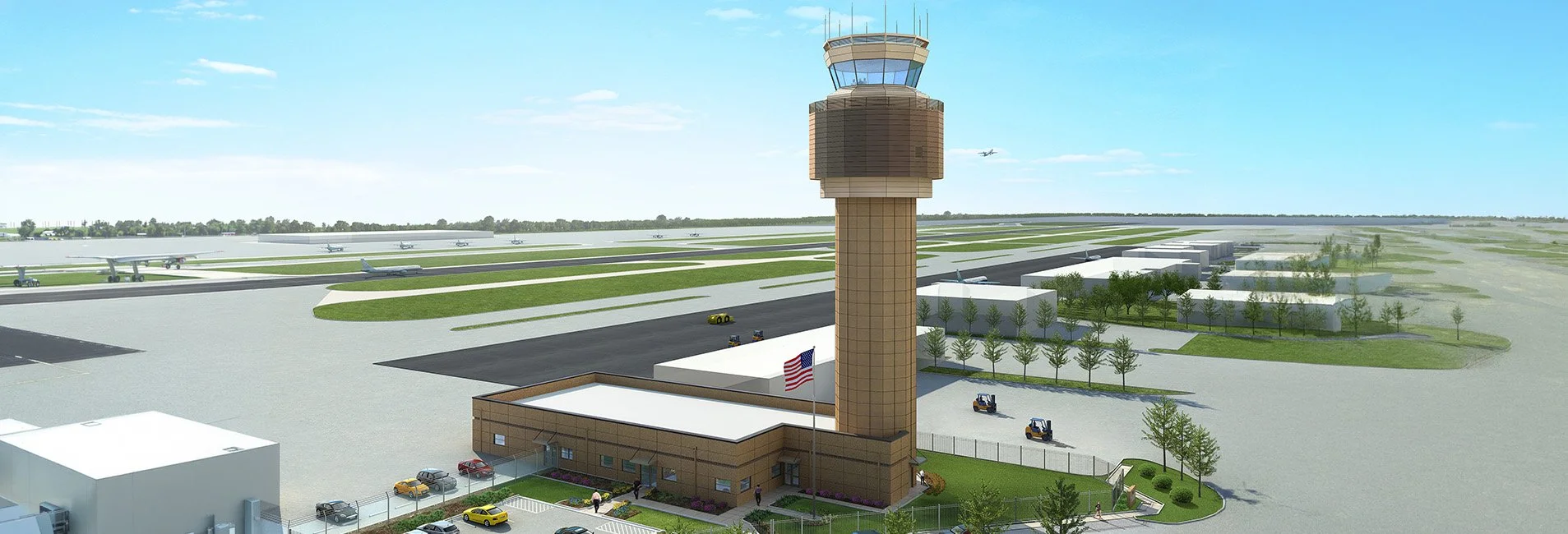
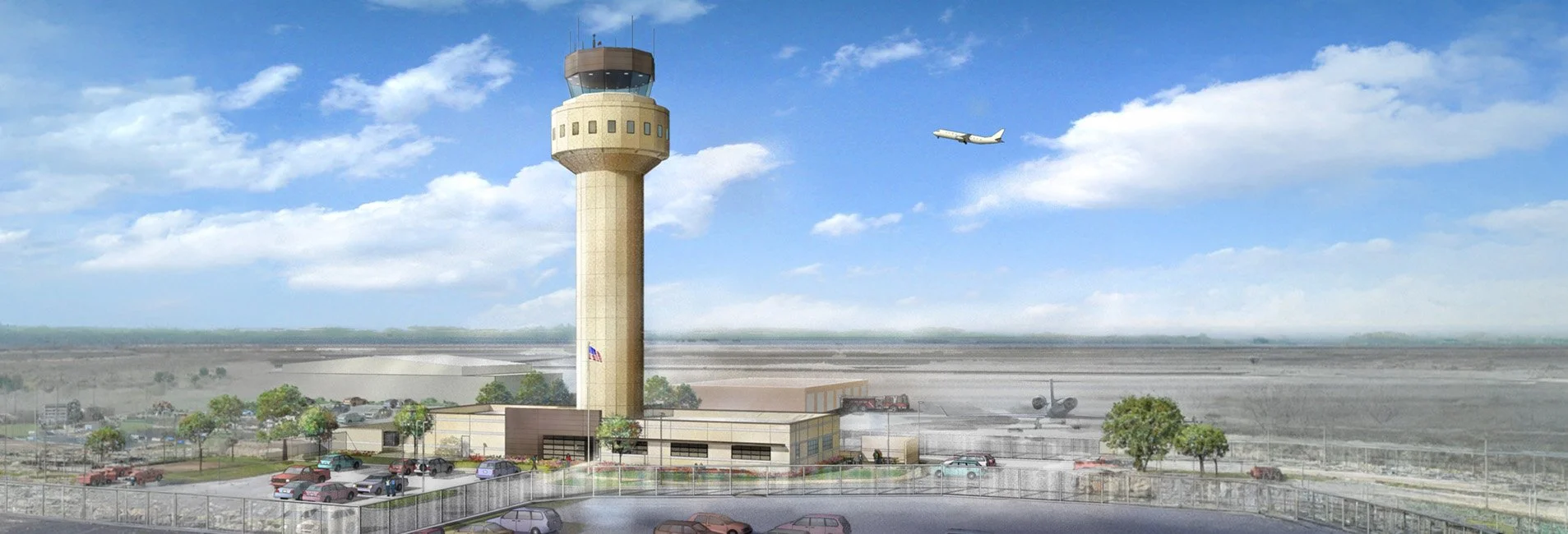
Palm Springs International Airport, Air Traffic Control Tower and Base Building
Palm Springs International Airport ATCT + Base Building
-
Palm Springs, CA
-
Federal Aviation Administration, NW Mountain Region
-
127 Foot Tower
7,000 SF Base Building
-
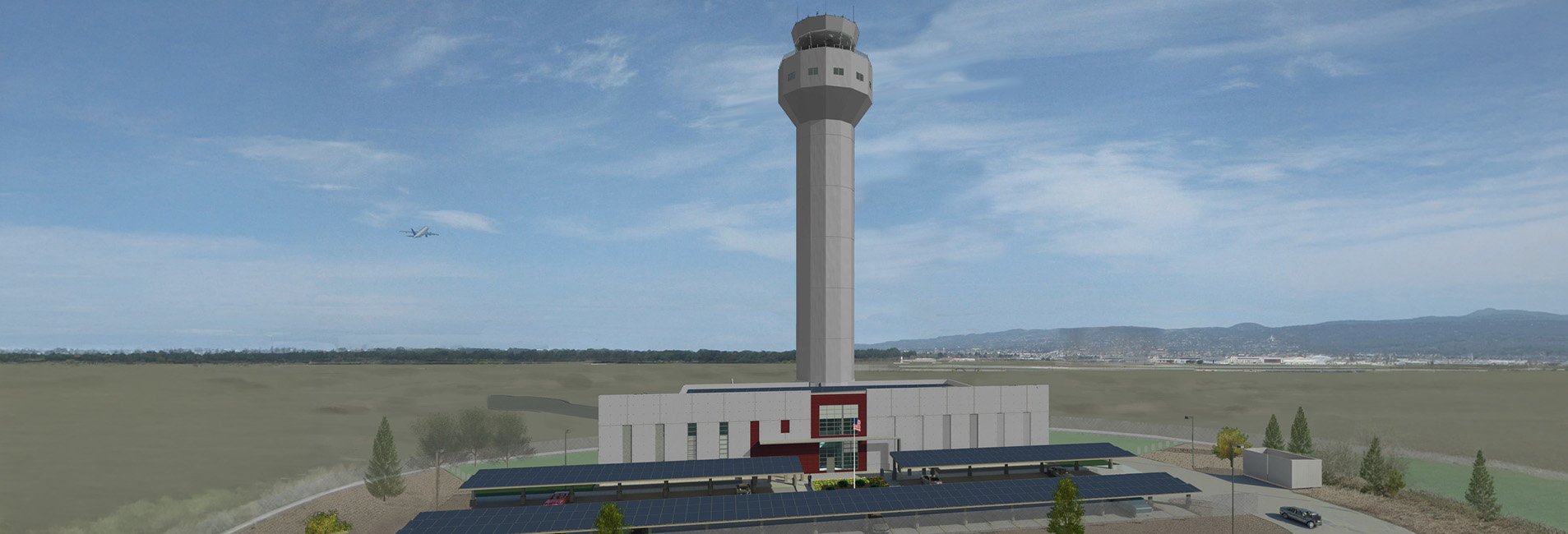
10,000‑SF, 150 kW photovoltaic system generating ~310,000 kWh annually
Exterior shading system with metal awnings and large-diameter tube elements for performance and visual identity
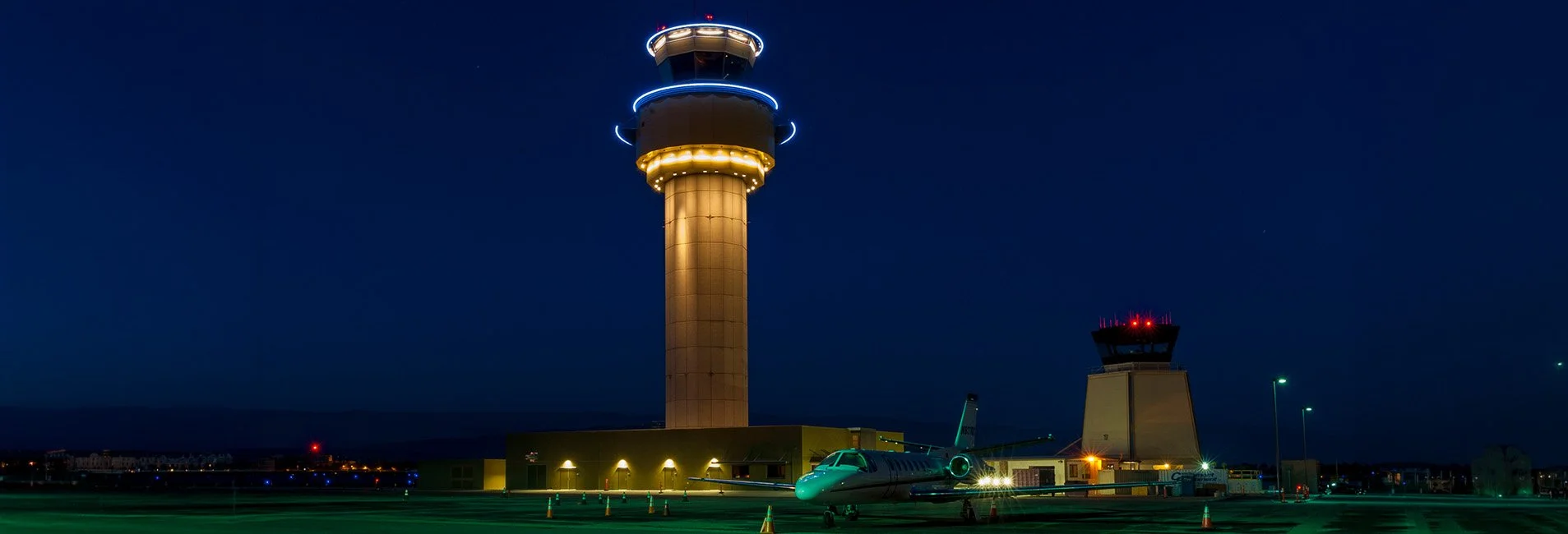
LED exterior lighting designed to reflect the airport’s character
LEED®-informed design focused on energy efficiency and long-term operational savings.
Staff support areas, including workrooms and operational support spaces for FAA personnel
-
Full-scope services including architecture, engineering, energy modeling, and blast analysis
In designing the new air traffic control tower for Palm Springs International Airport, the FAA required a life-cycle cost comparison of three different mechanical systems. Because of the unique cooling loads of the facility, the unique environmental conditions in Palm Springs, and Southern California’s varying utility rates, four systems were studied.
The project includes a 10,000-SF, 150 kW photo-voltaic system atop the vehicle parking shelter to generate electricity, which is fed back into the electrical grid to offer power used to run the facility and save approximately 310,000 kW-hours annually (saving $16,000). The four HVAC systems chosen for analysis were water-cooled chillers, an air-cooled chiller, air-cooled chillers with ice storage, and a ground-source heat pump system. The ice storage option was considered due to time-of-day electrical rates for the area. During afternoon peak periods in the summer months, electricity costs more than twice the rate as during the night. A ground-source heat pump system also was analyzed because space is available adjacent to the airport for an extensive well field.
Due to the desert location, windows in the junction level and base building were protected by metal awnings that were compatible with the awnings of the nearby terminal. As part of the window shading system, large diameter round tubes were used to further accentuate the unique look desired by the airport. The building design is based on LEED® standards. At the request of the airport, LED lighting was included on the exterior to provide a unique appearance to the ATCT reflecting the unique character of the airport.