How a 153-year-old building “goes green” while remaining the heart of a community
Alexandria, Virginia’s City Hall and Market Square renovation shows how a historic landmark can cut emissions, advance productivity and efficiency, and stay at the center of community life.
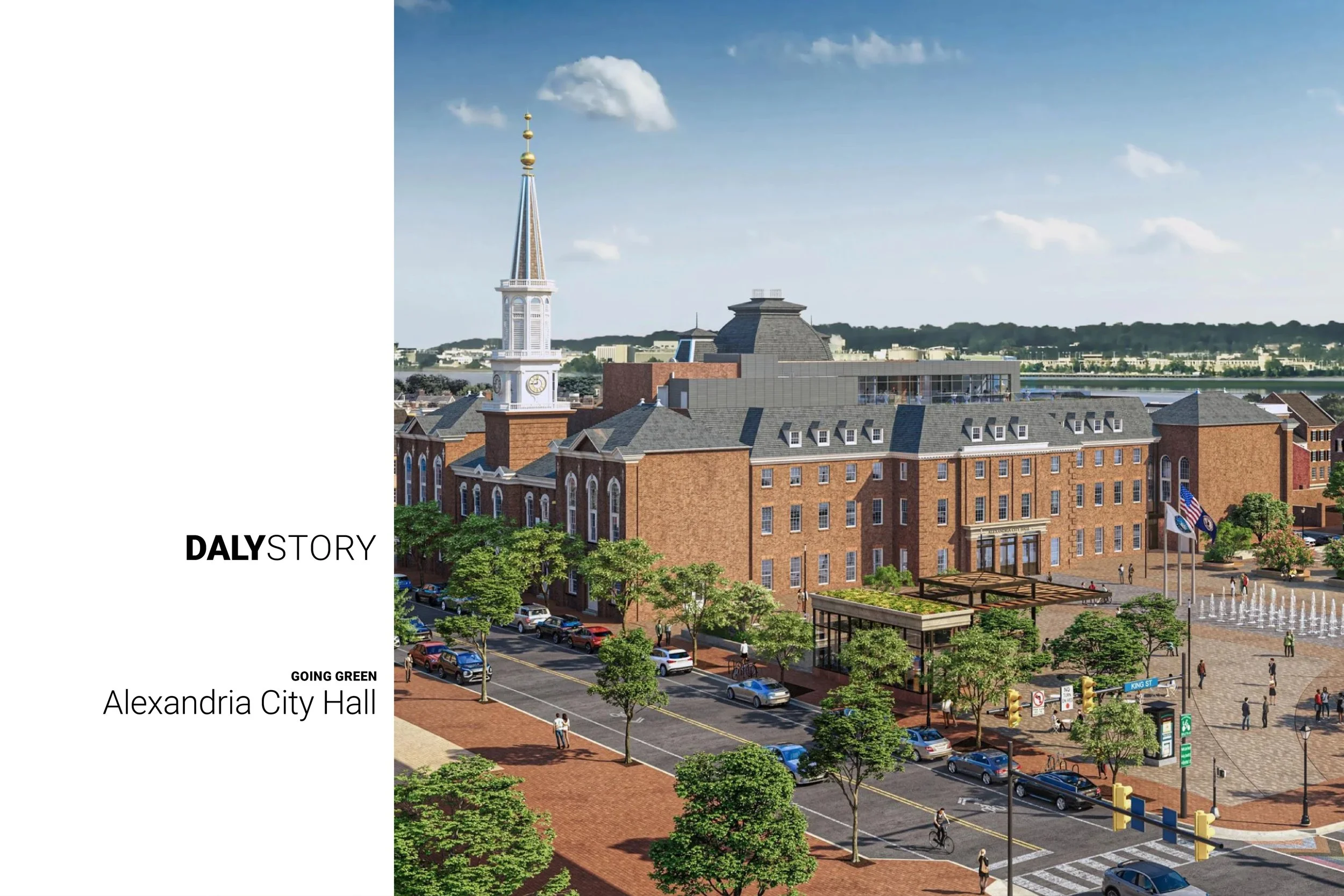
Alexandria Living recently featured the project in an article called “Alexandria City Hall Goes Green,” detailing the project and a few of the new sustainability features that are part of the city’s ambitious plan to work toward carbon-neutral new buildings by 2030.
The modernization of Alexandria City Hall reflects a broader shift in how cities approach the future of civic infrastructure, prioritizing performance, longevity, and environmental responsibility without compromising cultural identity.
The project moves beyond surface-level upgrades to address core building systems, improving energy performance and operational efficiency while extending the useful life of a historic public asset. This approach underscores a critical reality: the most sustainable building is often the one already in place, provided it can be carefully retrofitted to meet contemporary standards and build in resiliency for the future. By reinvesting in existing facilities rather than pursuing new construction, cities can demonstrate fiscal responsibility and prepare themselves for future-oriented stewardship of resources.
Projects like this also signal an evolution in how municipalities define value. While energy savings and reduced emissions are key drivers, the return on investment extends further: improved occupant comfort, increased resilience, lower lifecycle costs, and reinforced civic pride. Modernizing aging systems, improving envelope performance, and reducing energy consumption all require precision in balancing technical upgrades with preservation goals.
Read more: Civic Market Sector Leader Anya Grant explores how to give a voice to all stakeholders.
Alexandria City Hall’s renovation illustrates how thoughtful reinvestment can transform legacy buildings into high-performing civic assets. It is a model for other communities facing similar challenges: adapting aging infrastructure to meet modern expectations without erasing the past. The answer lies in integrated design, technical rigor, and a commitment to listening — and by treating each project as an opportunity to reimagine what civic buildings can deliver for the communities they serve.
Read “Alexandria City Hall Goes Green” on the Alexandria Living website.